On the Line with Starbucks Workers United in Long Island
Trump and his billionaire backers are doing their best to scare people out of speaking up for what's right. But Starbucks baristas aren’t afraid - and neither are the Jobs with Justice coalitions who have showed up to picket lines, sip-ins, Workers’ Rights Board meetings, and more until these workers, and all workers, win the fair wages, reliable hours, and workplace protections they deserve.
Starbucks Workers United made history on December 9, 2021, in Buffalo, New York, by voting to become the first unionized Starbucks store in the country. Since that monumental vote, baristas at more than 640 stores have come together with their coworkers to fight and win their union elections. Over the past four years, Starbucks has fought back hard: ramping up union-busting, spending billions on a new CEO, and piling up hundreds of Unfair Labor Practice charges—all while refusing to bargain a fair contract with its workers.
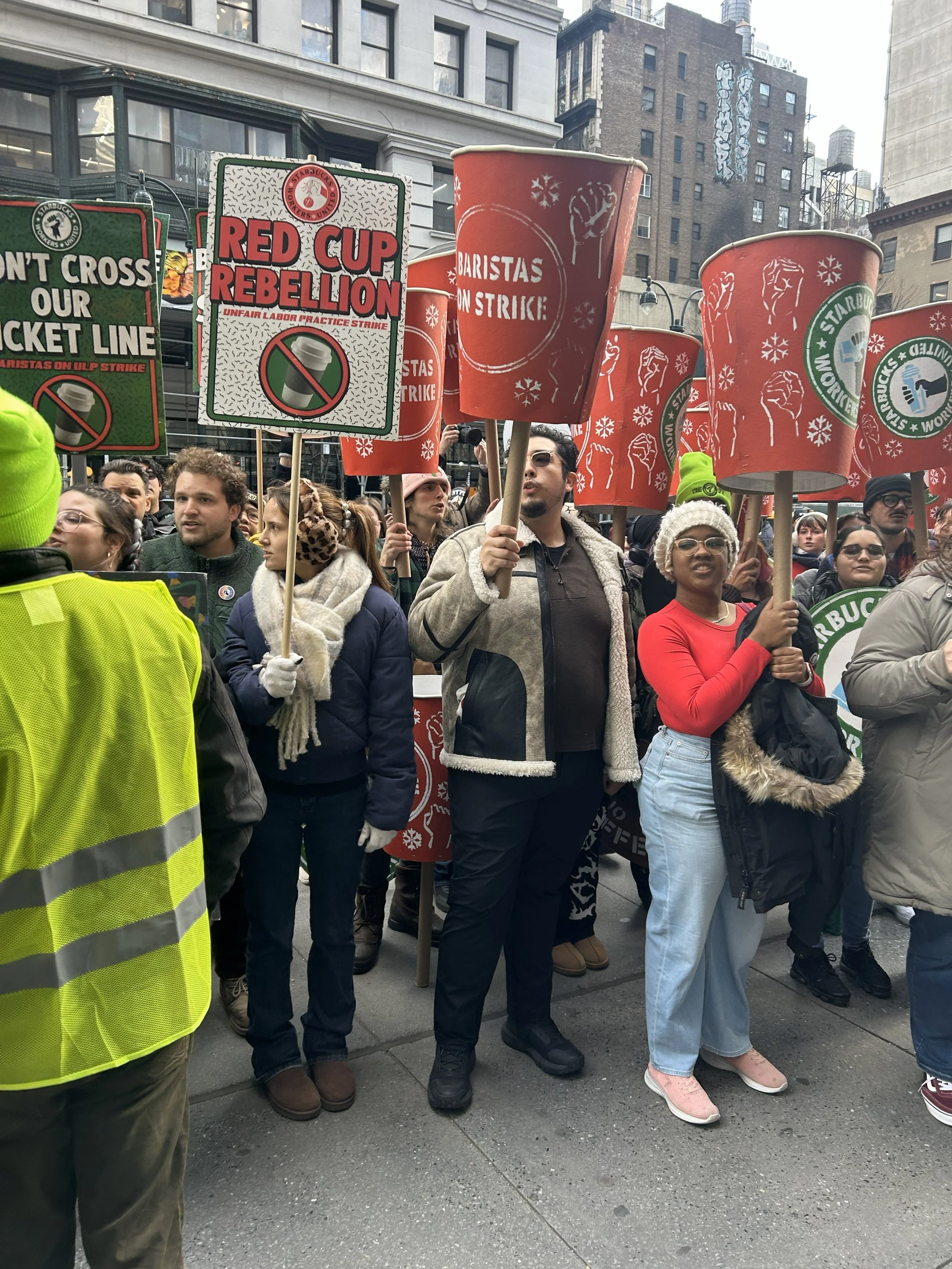
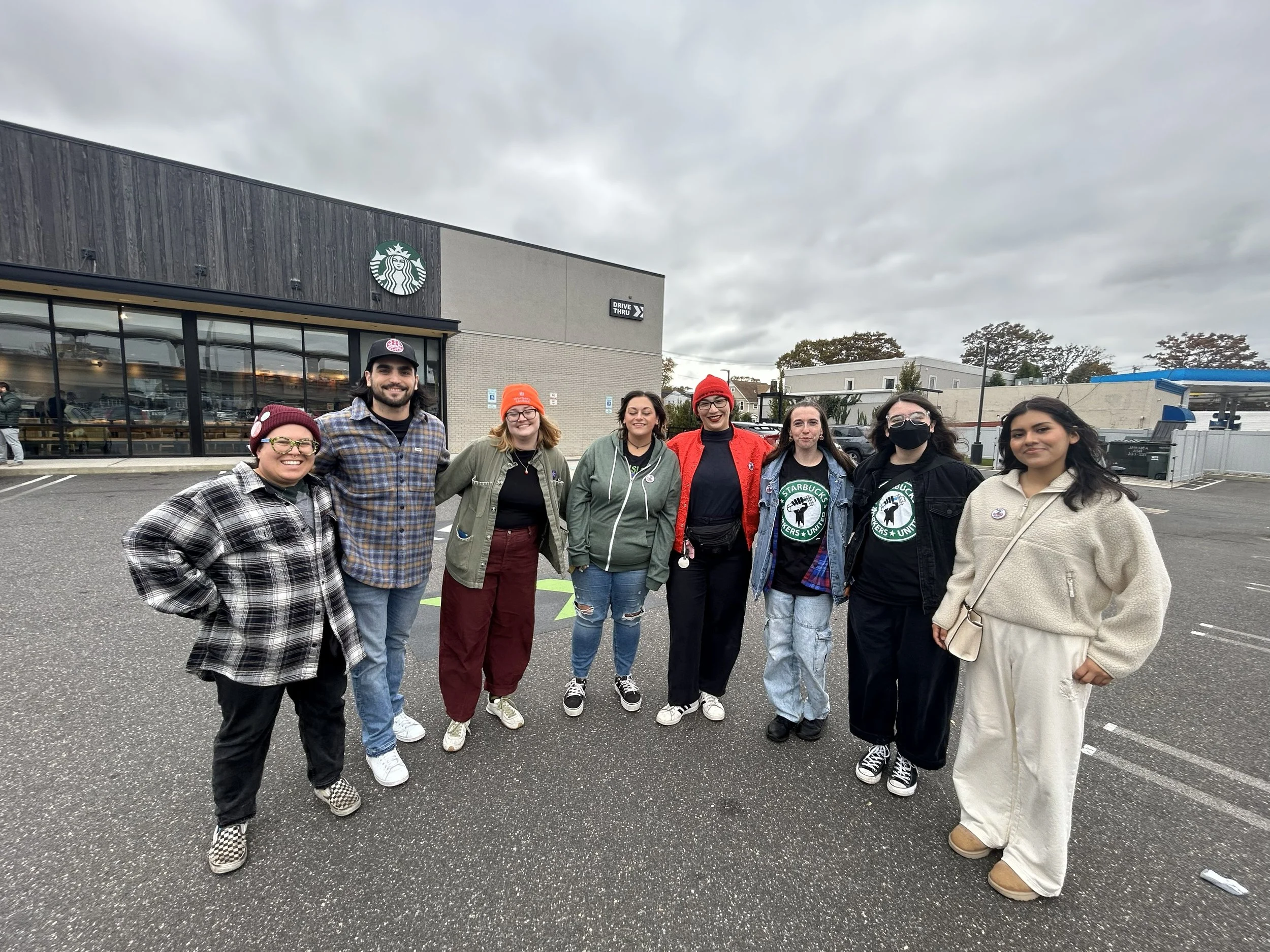
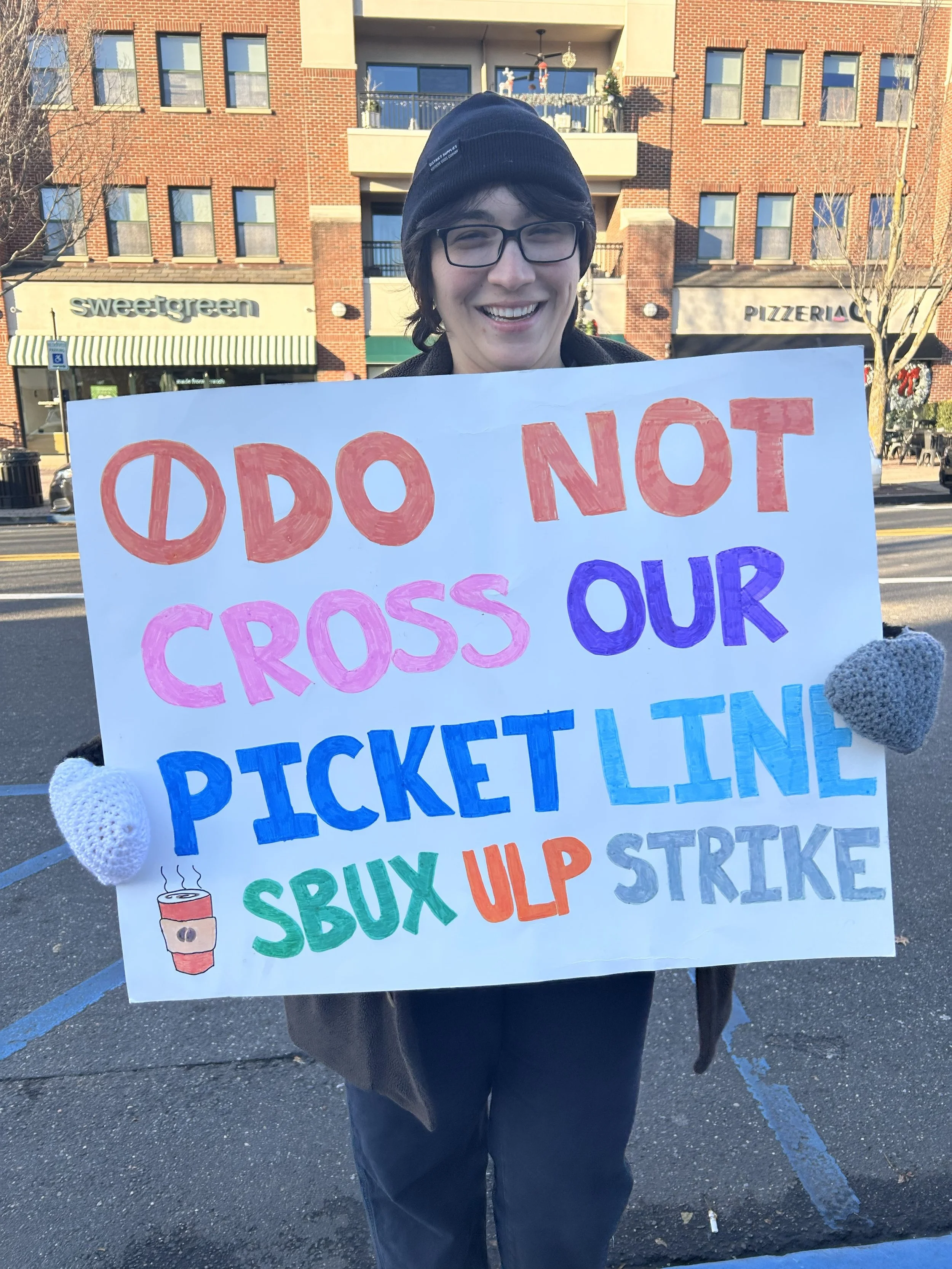
Fast forward to this November: an incredible 92% of over 12,000 SBWU baristas voted to authorize a strike, launching the current, history-making Red Cup Rebellion. By December 11th, more than 3,800 baristas across 180+ stores—yep, including Bellmore, Farmingville, and Garden City on Long Island—were out on strike.
Curious about what’s happening on the ground, I chatted with Long Island Jobs with Justice Organizers Diane Cantave and Kyle Pfalzer. They shared their behind-the-scenes stories about showing up for Starbucks workers—and how this latest wave of strikes is sparking even more solidarity across Long Island.
Why is it important for Long Island Jobs with Justice to show up for Starbucks Workers?
Diane Cantave, Long Island Jobs with Justice Organizer: This is not only about Starbucks workers, it’s about all workers having a say and feeling safe at work. Last week, we showed up with the New York State Nurses Association as they fight for a new contract and safe staffing. As with all workers, when they’re not getting what they deserve, if they don’t feel safe in their working conditions, Jobs with Justice is going to be there to show workers we have their back.
When JWJ rolls in with faith leaders, union allies, and community groups, it sends a big, bold message: We’re not backing down. We’re in this fight from start to finish—until workers get what they deserve.
What has Long Island JWJ’s support of SBWU looked like?
Kyle Pfalzer, Long Island Jobs with Justice Organizer: From day one, Starbucks workers really appreciated and embraced our coalition work that brings workers and community members together and puts our power on display in really great ways. It’s been a really powerful partnership. Early on, in 2021 and 2022, a lot of LIJWJ’s support was showing up at individual stores as they organized pickets.
Then, in the fall of 2023, we began to work more closely and do more long-term planning to ramp up community engagement across Long Island. That’s when Ani Halasz, Executive Director of Long Island Jobs with Justice, brought up the Workers’ Rights Board model, and they were like “hell yea!” and that’s when things really ramped up.
2024 was all about harnessing our community power. In February, we pulled off a Workers’ Rights Board hearing with local legislators, academics, and faith leaders—everyone came together to hear from four Starbucks workers directly. That event was a turning point. Out of it came a set of recommendations and a detailed report, which we shared with the media and hand-delivered to store managers that May. Faith leaders rallied too, getting over 100 of their peers to sign a letter to Starbucks management, then marching it right into stores and putting it in managers’ hands.
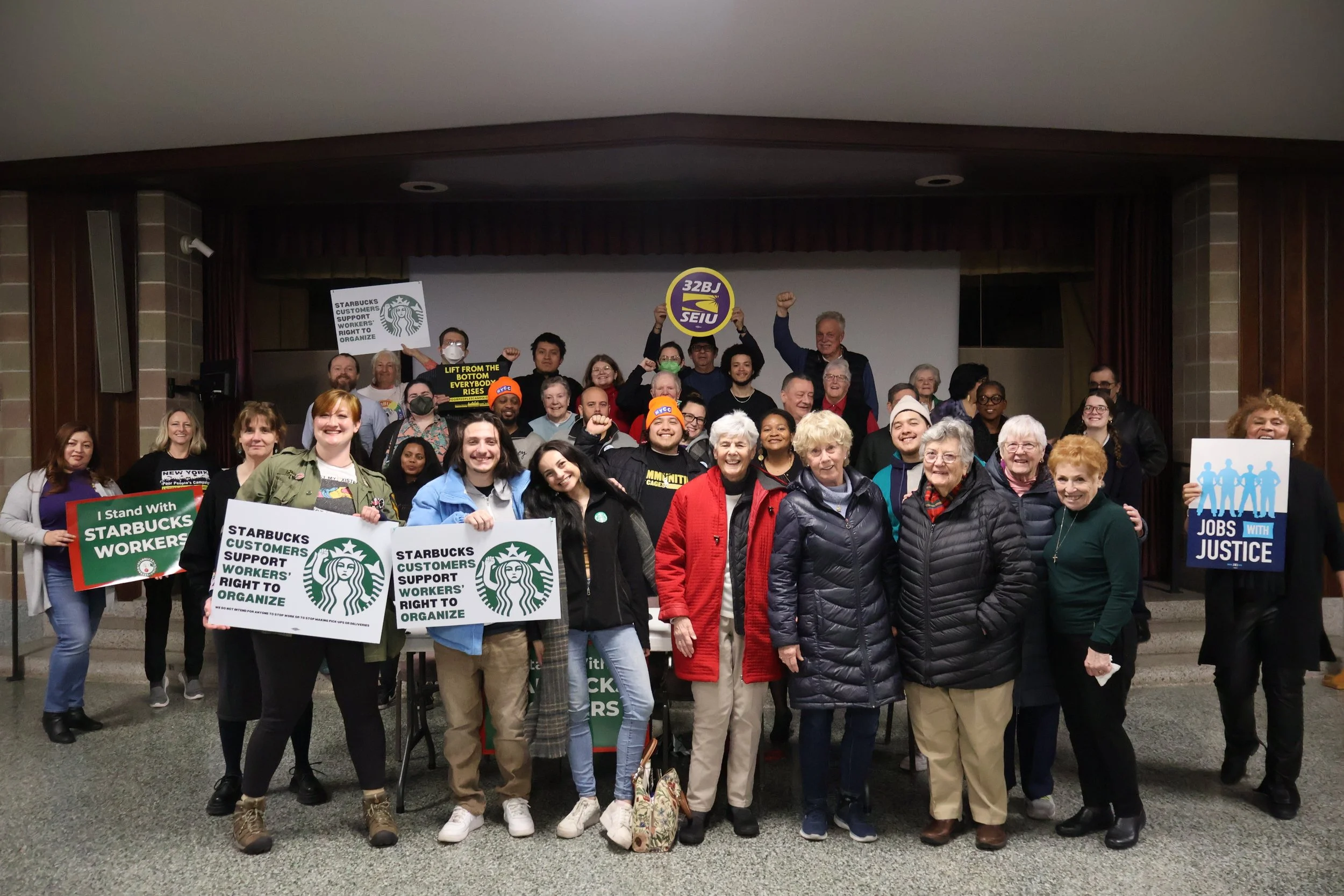
Long Island Jobs with Justice and allies celebrating a powerful Workers’ Rights Board hearing with Starbucks Workers United.
Kyle: Then came June 2024—time for the March on the Boss. Picture this: two dozen allies taking over the Starbucks regional headquarters lobby in New York City, arms full of Workers’ Rights Board reports. We took over the lobby and made space for workers to speak their minds. It was electric.
What sort of impact did that have in Long Island?
Kyle: Even though the national contract fight is still raging, all this local organizing and community pressure has already led to real wins for workers right here.
Take the Farmingville location, for example. For months—years, even—workers struggled under a toxic manager. They did everything by the book: talked to managers, went through HR, and followed every company process to raise their concerns. And what did Starbucks do? Nothing. They protected the union-buster and even fired workers who tried to organize. But when our community across Long Island spoke up—loudly—after the March on the Boss, guess what happened? Within a month or two, that manager was out.
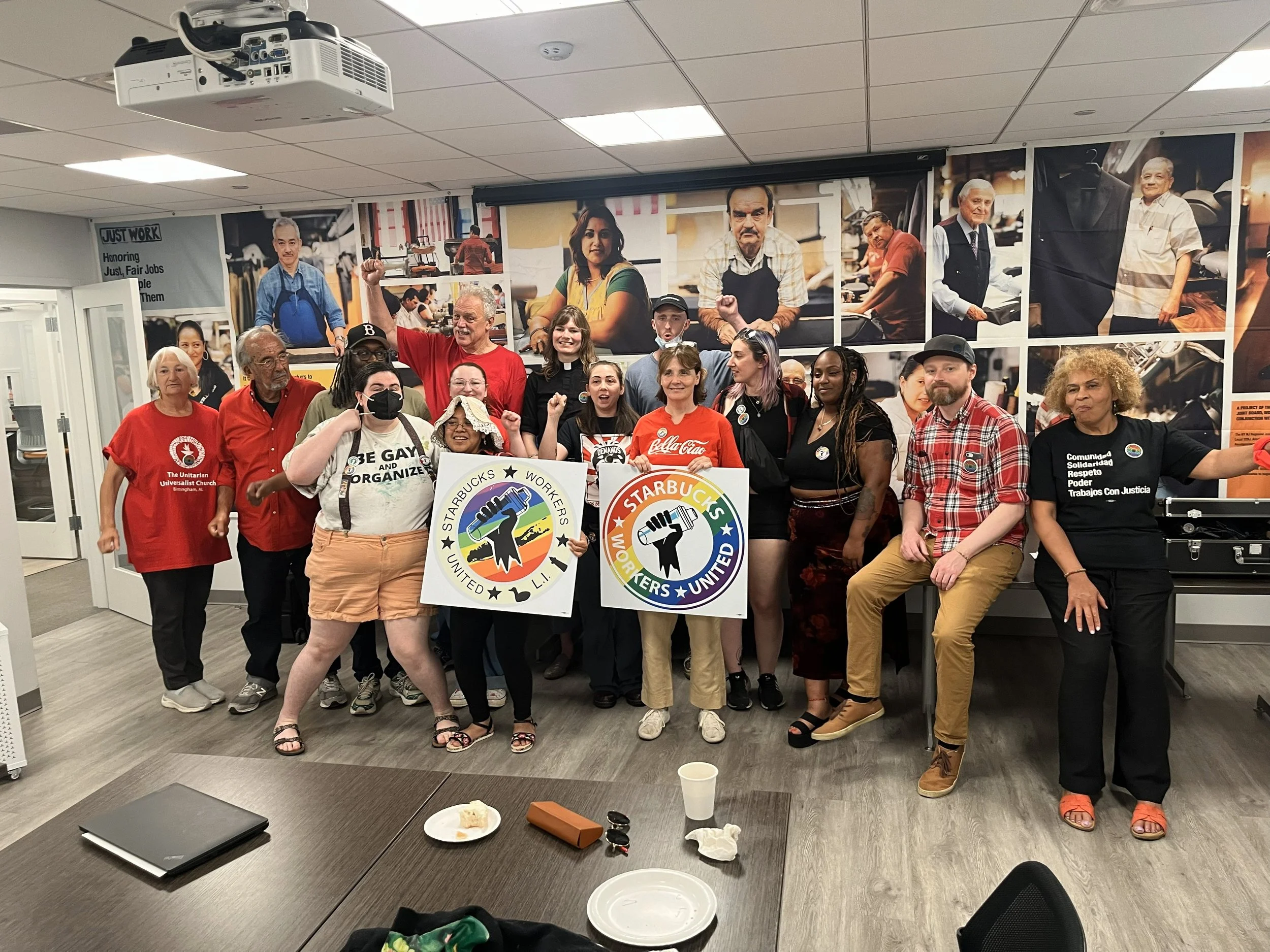
That’s what real community power can do. Now that we’ve entered the nationwide Red Cup Rebellion, I have to ask: What feels different this time around?
Diane: Honestly, I’ve never seen faith leaders and community partners come together like this before. It’s more than just showing up—it’s about building real relationships and making sure every worker feels seen and supported. Local congregations have teamed up to start a food distribution network for striking Starbucks workers, and it keeps growing every week because of these deep connections. Watching congregations invite worker leaders in to share their stories and real-time updates has been incredible. These platforms have brought us closer, made us stronger, and proved that when you reach out, your community shows up for you.
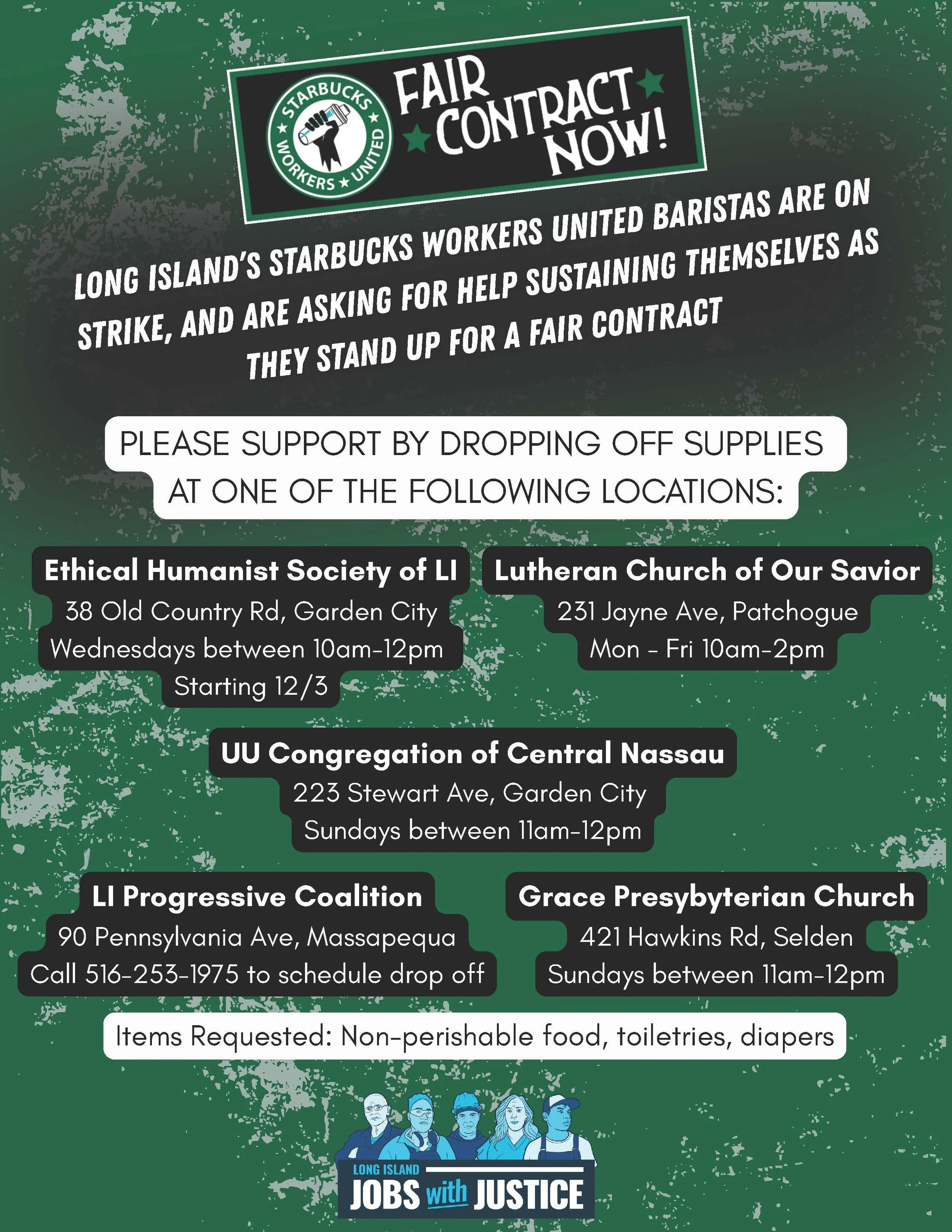
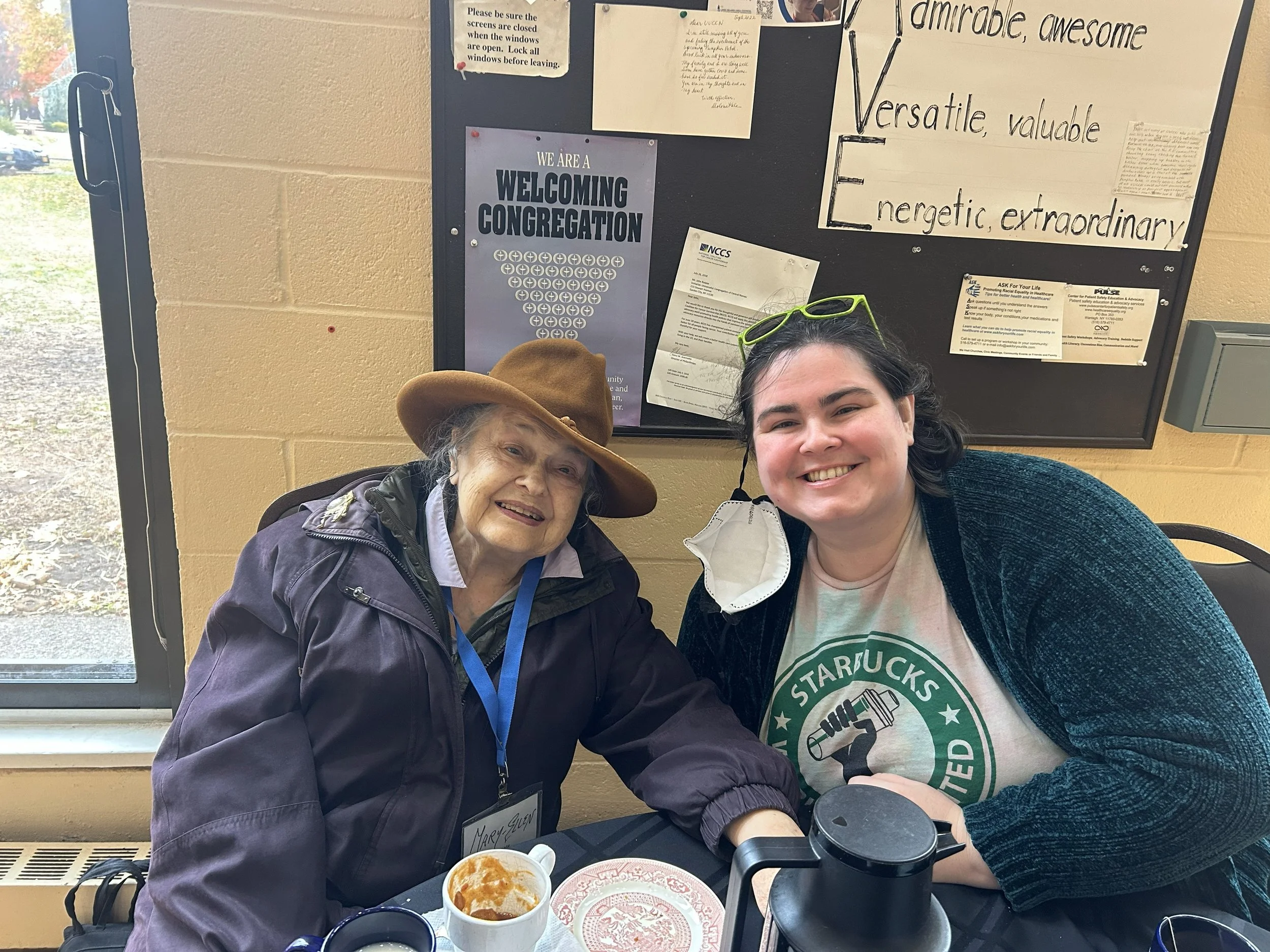
Diane: We’re seeing workers and community members stepping up in bigger, bolder ways—because they know what they deserve, and they know we’re behind them. Take Liv Ryan, for example. She played a huge role in our Workers’ Rights Board hearing, kept speaking to congregations, rallied more folks to get involved, and most recently took part in civil disobedience at the Empire State Building. She stood her ground, surrounded by a cheering crowd of over a hundred supporters chanting, “Hang in there! We’ve got you! We love you!”
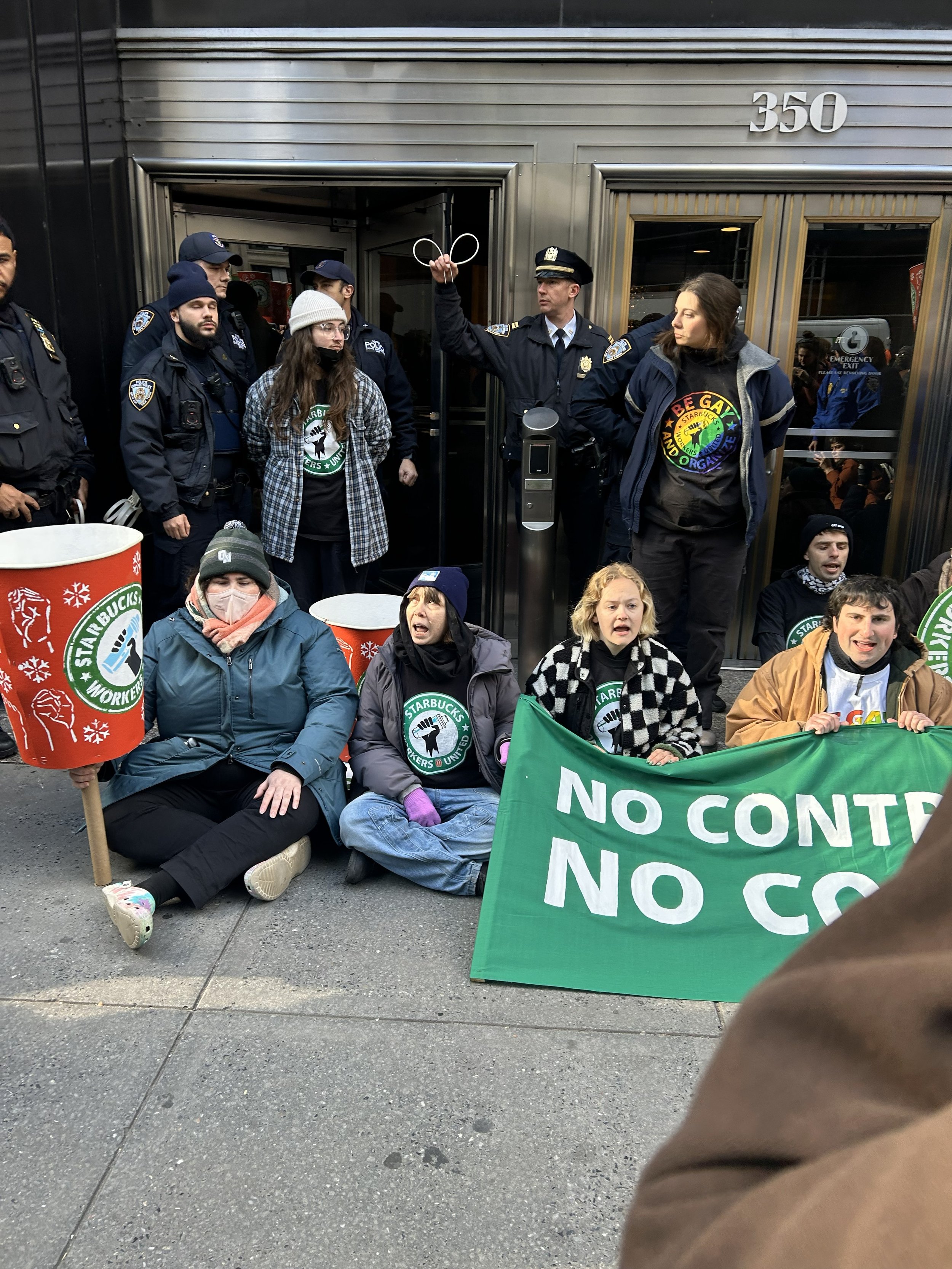
Starbucks Workers United blocking the Empire State Building on December 4, 2025, as part of the Red Cup Rebellion ULP Strike
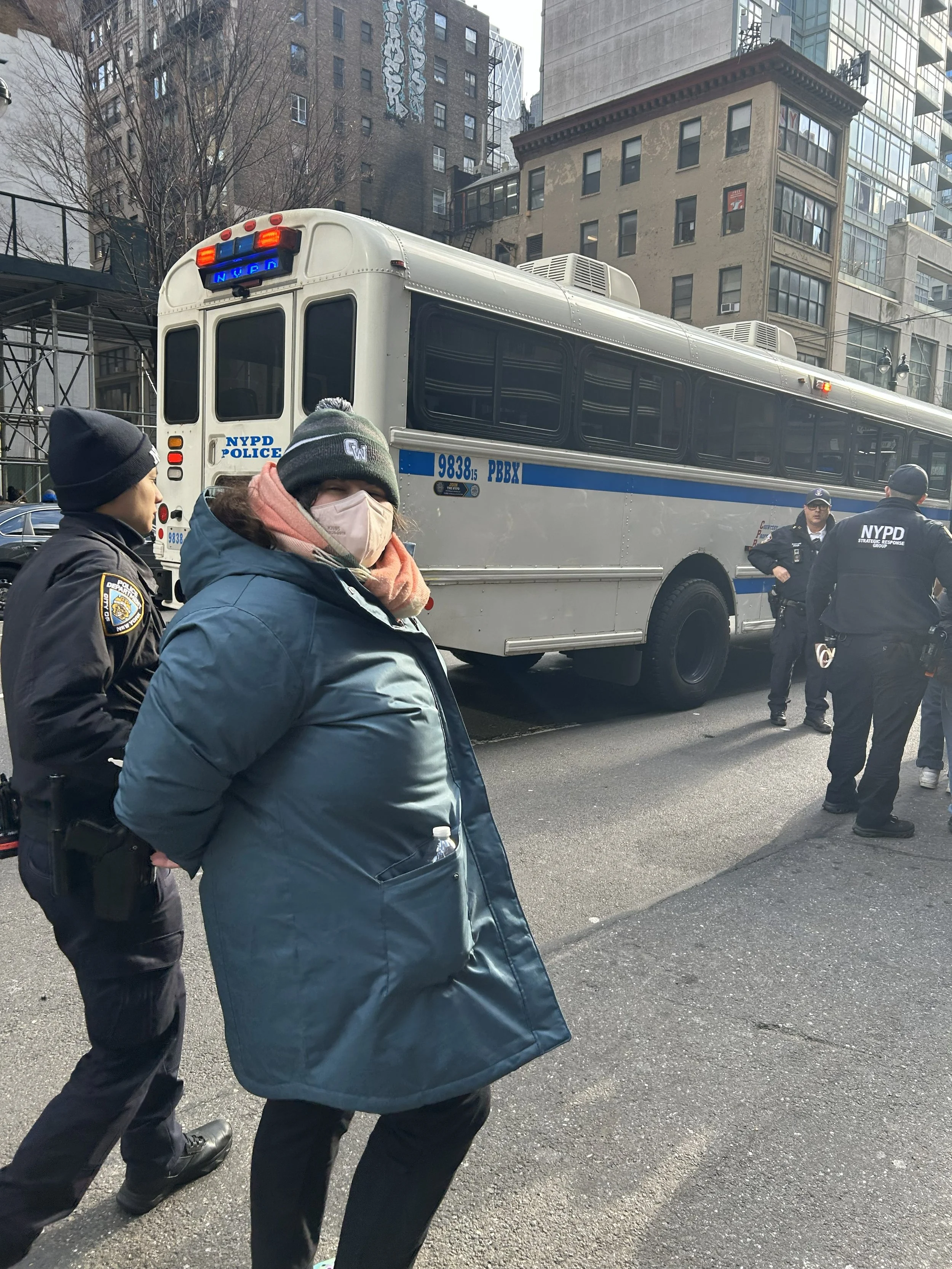
Starbucks Workers United and Long Island Jobs with Justice leader Liv Ryan being arrested during the December 4, 2025, direct action at the Empire State Building
What are you seeing or hearing on the picket lines?
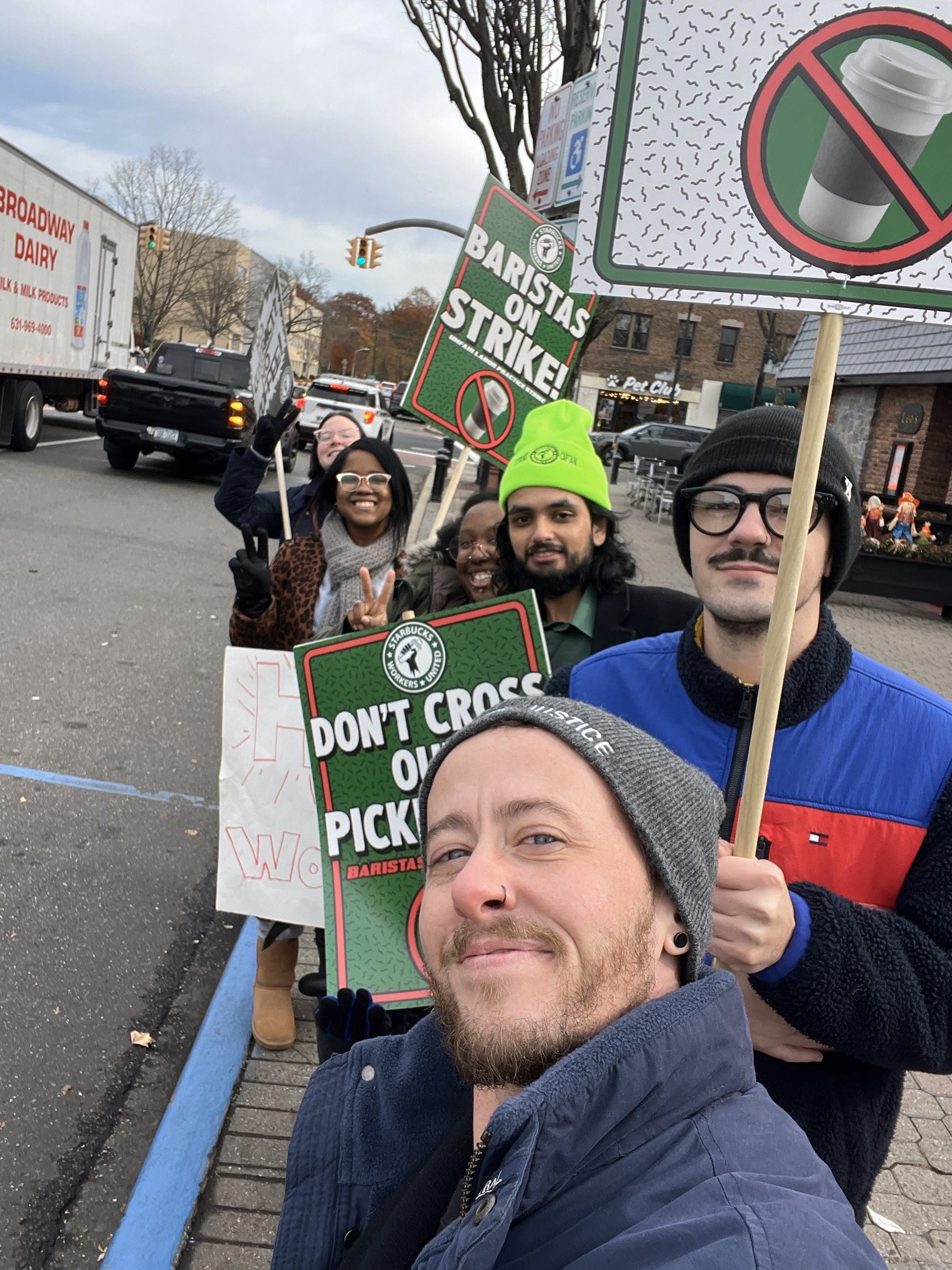
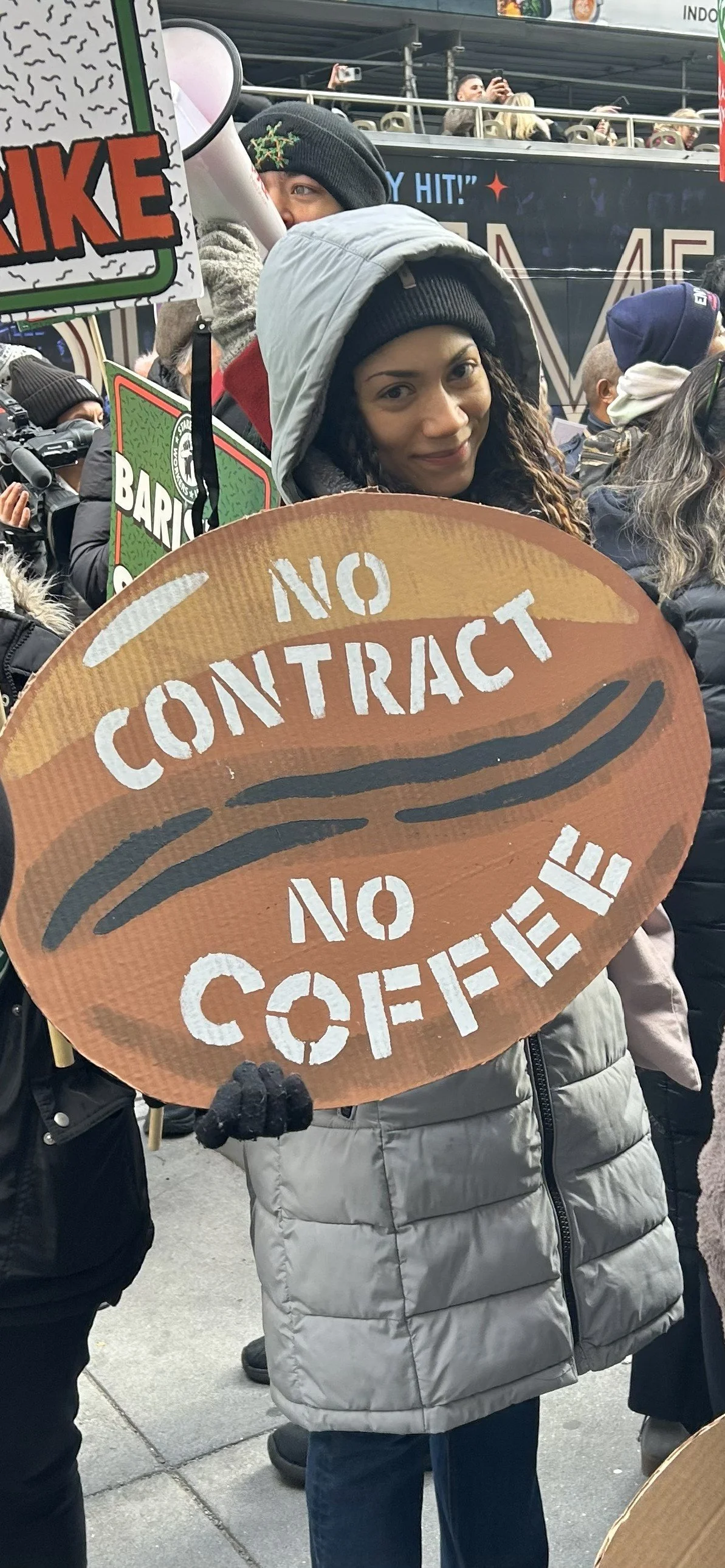
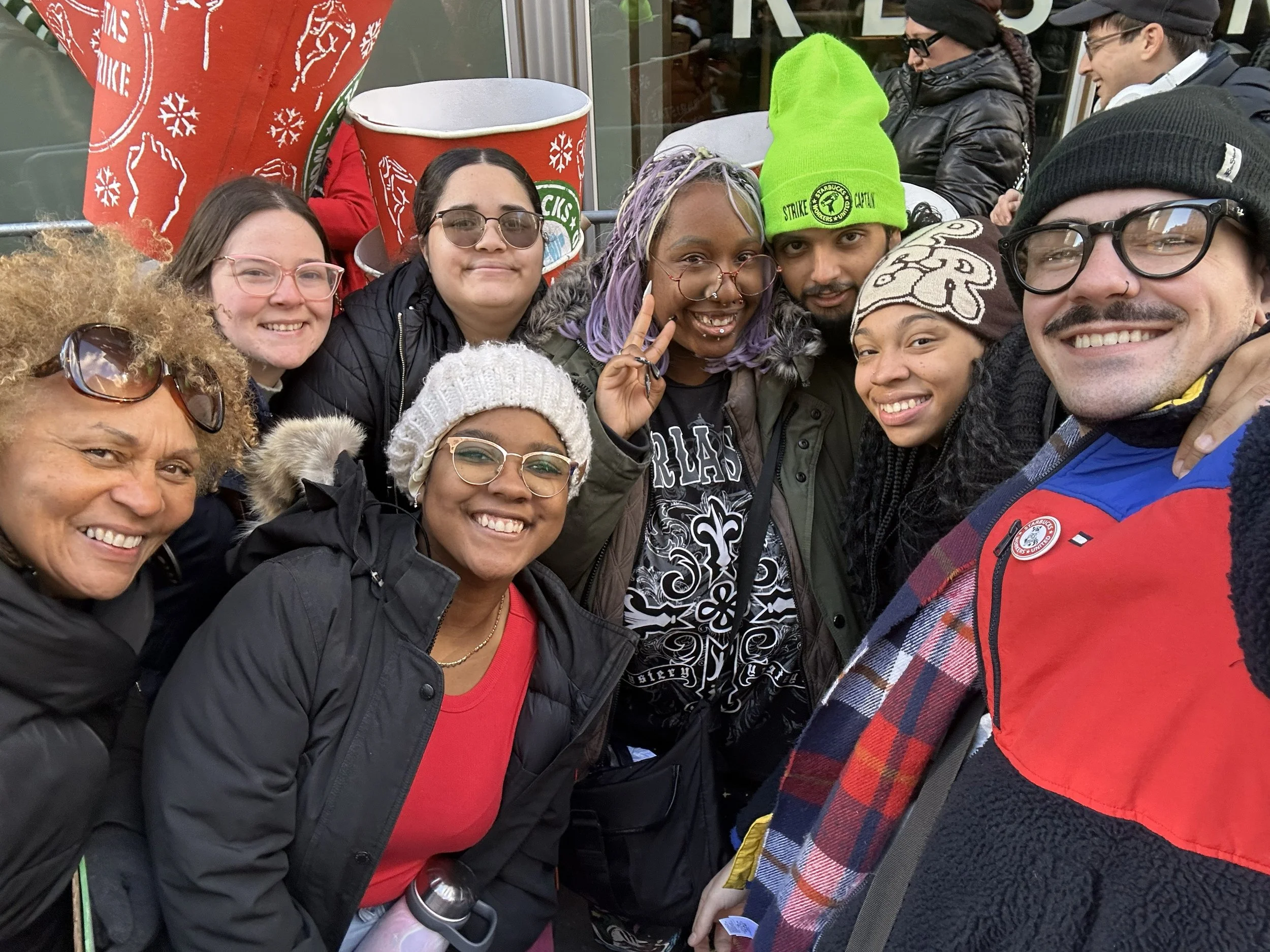
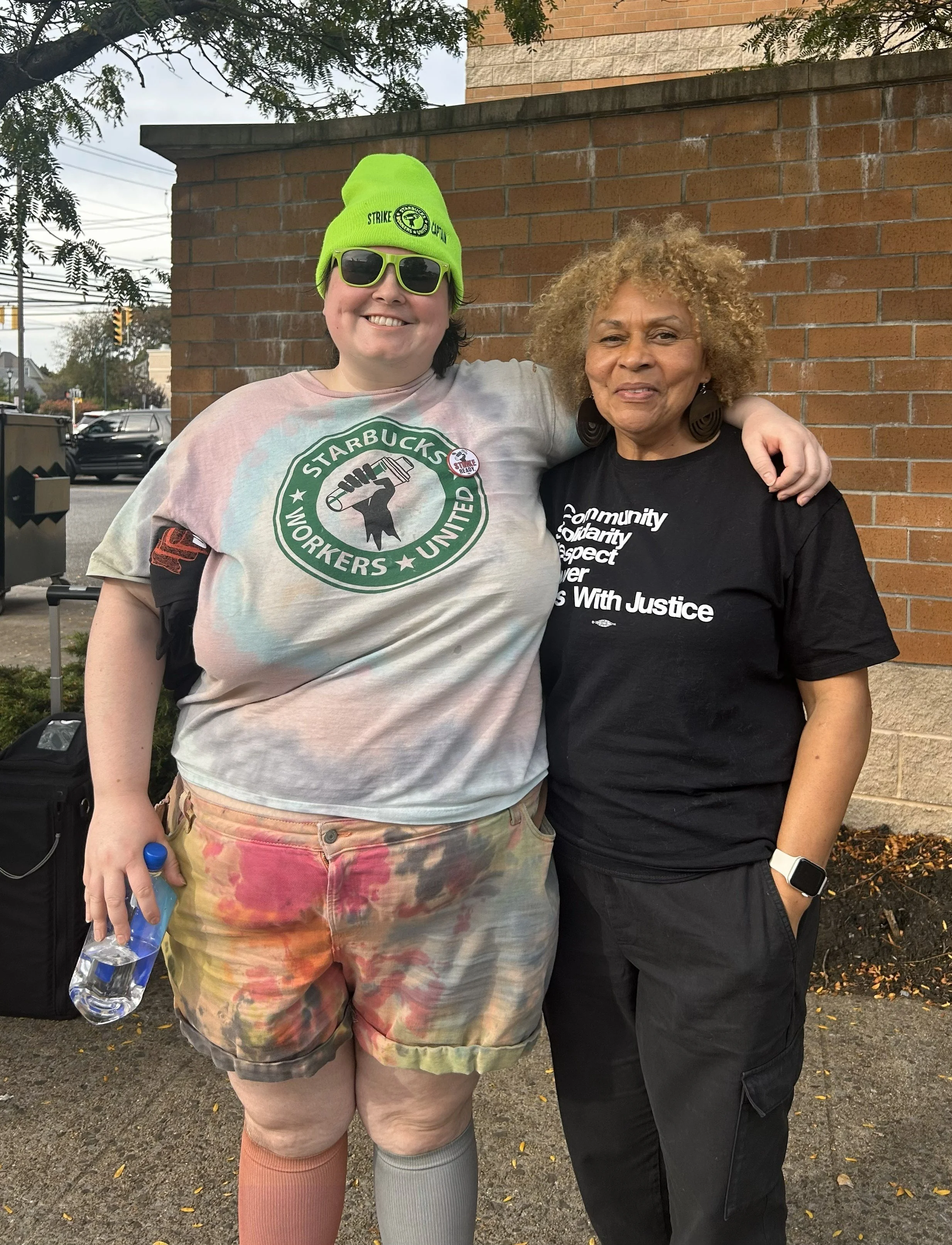
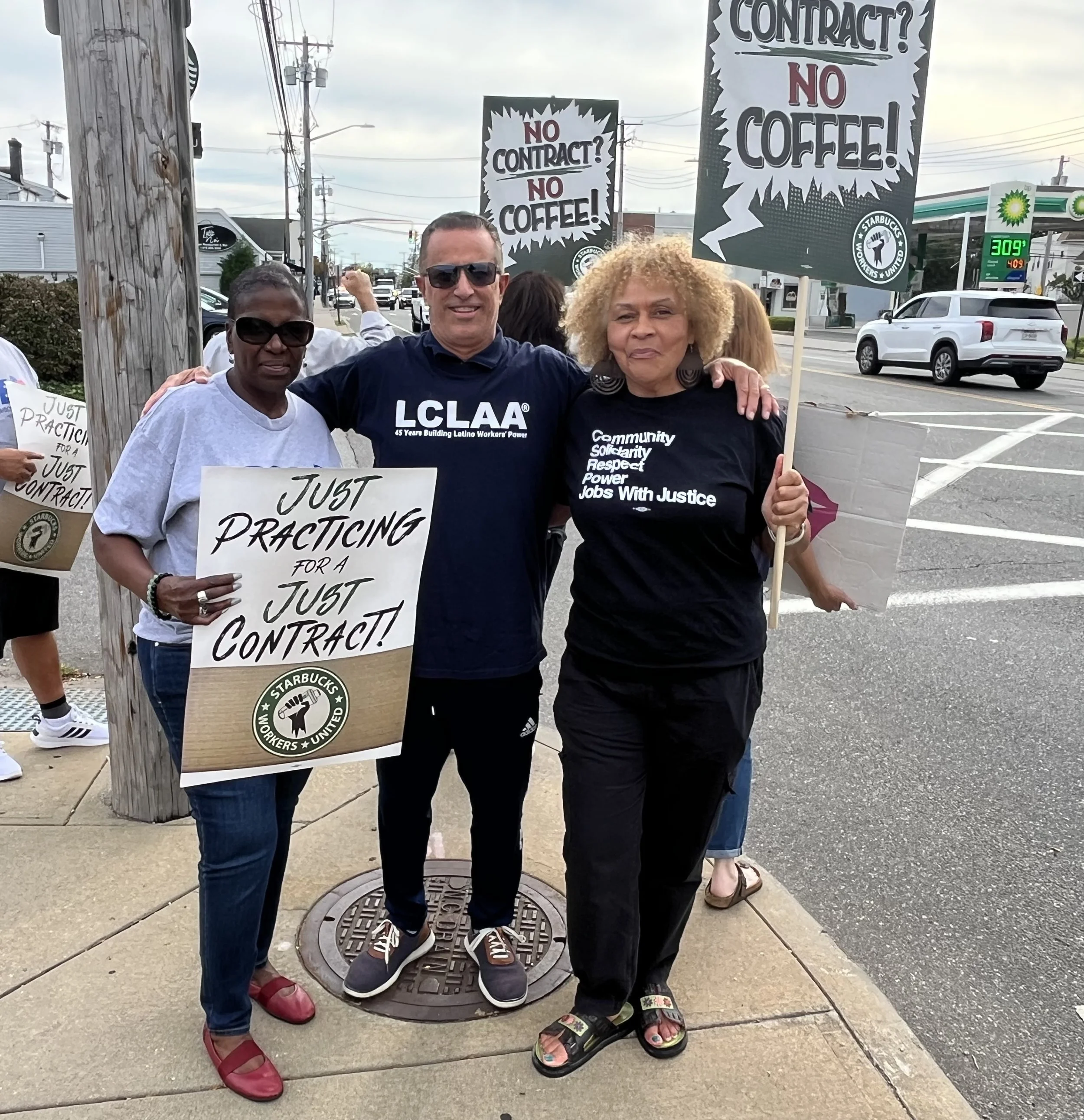
Diane: I’ve got to go back to the relationships and the incredible camaraderie I’m seeing, and the joy folks bring to the picket lines even in frigid temperature. When someone has car trouble - immediately another worker is jumping in to make sure they’re able to get to school. When the scab managers try to belittle the workers or threaten them with unfavorable schedule changes - the baristas are unbothered and clear they’re out on strike until they get what they deserve. They play music and greet each other with hugs - and they really inspire me and everyone around them to keep going. I just love their don’t stop attitude.
What is LIJWJ up to as we head into 2026?
Kyle: I want to echo Diane’s sentiment around the energy we’re feeling all around us. We’re seeing all sorts of union members and new people come out and a deep desire to build not only power together - say building up to a 2028 general strike - but building relationships between unionized and non-unionized workers. As Diane has said, every event we go to - whether it’s standing up against ICE and detentions or standing with nurses for a fair contract - folks want to support workers and each others’ fights.
Going into 2026 we’re going to see even more power and sense of community across industries, status, faith, and more. We’re looking into supporting worker centers in the area, and legislatively we’re a member of the New York State Equity agenda working toward a public bank in New York state and closing usury loopholes to rein in predatory loan apps, like Chime and Dave, from being parasites between workers and their paychecks.